
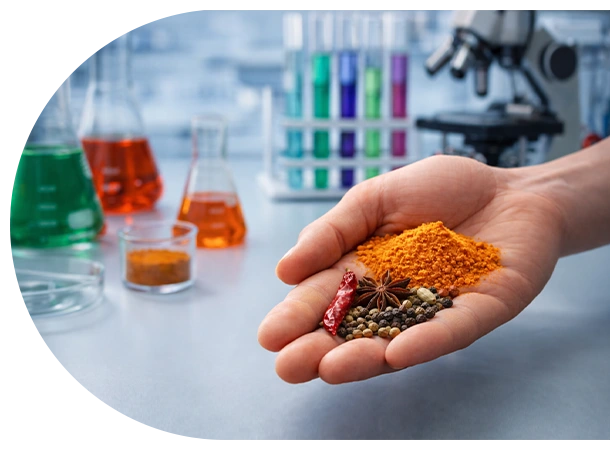
India is the world's largest producer and exporter of spices, supplying chilli, turmeric, herbs, and seasonings to markets across the USA, Europe, the Middle East, and Asia. However, for exporters and global food brands, choosing the right spice manufacturer in India is far more critical than simply finding a supplier.
A reliable manufacturer ensures consistent quality, export compliance, food safety, and long-term scalability - all essential for international markets where rejection rates, shelf-life issues, and regulatory audits can significantly impact business.
This guide explains what global buyers should evaluate before selecting an Indian spice manufacturer for export.
The right spice manufacturer for global export is one that is a direct manufacturer (not a trader), provides batch-wise testing and COA, offers scalable production, supports product customization, and understands export packaging and compliance.
The first and most important step is confirming whether the company is a direct manufacturer or a trading intermediary.
A genuine spice manufacturer:
Traders typically depend on third-party factories, which limits traceability and consistency - both of which are critical for export markets.
Tip for buyers: Ask for factory location, production capacity, and processing flow details.
Export markets demand strict compliance with food safety norms. A professional spice manufacturer must demonstrate robust quality control systems.
Key quality checks exporters should expect:
Manufacturers supplying export-ready spices should follow FSSAI guidelines and align with international standards required by importing countries.
For a deeper breakdown, read: How quality control in spice manufacturing shapes the industry standard.
Export buyers often require large and repeatable volumes within defined timelines. Choosing a manufacturer with adequate production capacity ensures supply continuity.
Look for:
A scalable manufacturer helps exporters grow without changing suppliers frequently.
Global markets demand customized spice profiles depending on cuisine, application, and regulations.
A capable manufacturer should offer customization in:
Customization is especially critical for private label brands, food processors, and HoReCa clients who need consistent taste across regions.
Export buyers should inspect the manufacturer's processing infrastructure.
Best-in-class spice manufacturers use:
Automation improves uniformity, hygiene, and repeatability, which are essential for export acceptance.
You can also review our manufacturing unit capabilities to evaluate infrastructure depth.
Export-ready spice manufacturers must understand international packaging and documentation requirements.
Important factors include:
Proper packaging reduces spoilage, contamination, and rejection risks during long-distance shipping.
Manufacturers with export exposure understand:
Experience supplying to exporters serving USA, Europe, Middle East, and Asia is a strong indicator of reliability.
Selecting the right spice manufacturer directly impacts:
Exporters who partner with manufacturers - not traders - gain control, consistency, and confidence in their supply chain.
Choosing the right spice manufacturer in India is a strategic decision for exporters and global food brands. By focusing on manufacturing capability, quality control, customization, and export readiness, buyers can build reliable, long-term supply partnerships that support international growth.
A manufacturer-first approach ensures quality consistency, regulatory compliance, and scalable operations - key pillars of successful spice exports.
Related read: From Farm to Factory: how the spice export supply chain is powered.
Common questions global buyers ask before finalizing an Indian spice manufacturing partner.